
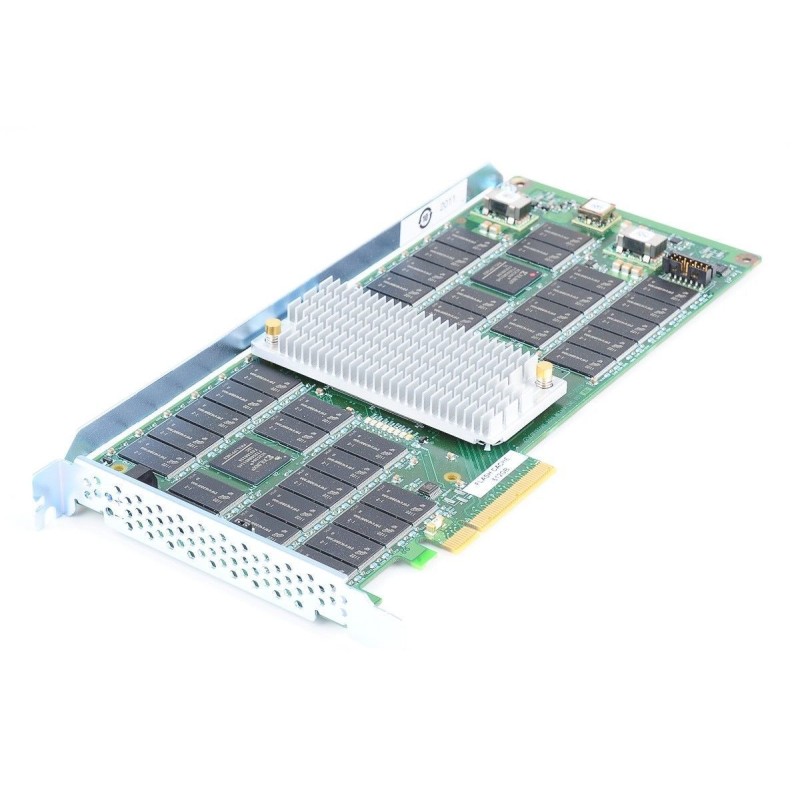
NetApp X1971A-R5 Flash Cache 1TB PCI-E 111-00708 Controller Module PAM Card

NetApp X1971A-R5 Flash Cache 1TB PCI-E 111-00708 Controller Module PAM Card
The NetApp Flash Cache 1TB PCI-E Controller Module (Model X1971A-R5, Part 111-00708) is a high-performance PAM card designed to accelerate storage workloads in enterprise environments. By providing a large, low-latency flash cache directly on the sto... Read More
price
$149.95
  • In Stock: 3
  • Manufacturer: NetApp
  • Model or Part: X1971A-R5
  • Condition: Refurbished
  • Weight: 2.00lb
United States Shipping
Orders over $200 qualify for Free Super-Saver Shipping! We ship at our discretion via the most cost-effective method using FedEx, UPS, or USPS.

To ensure your order is processed efficiently, all shipping charges must be pre-paid at checkout. We are unable to bill directly to third-party shipper accounts or use customer-provided labels for domestic shipments.
International Shipping
International orders begin processing as soon as payment is confirmed.

  • Pre-paid Shipping: For your convenience, you can select and pay for international shipping directly at checkout.
  • Carrier Accounts: Alternatively, we can bill transport costs directly to your FedEx account number. (Note: We cannot bill to DHL, TNT, or UPS accounts).
  • Customer Labels: We are also happy to ship internationally using pre-paid labels provided by you for any carrier.
Expedited and Rush Shipping
Need it faster? HardwareJet.com offers 1 or 2-day expedited shipping options during checkout for eligible items.

To get your order to the front of the line, expedited orders include a small rush fee in addition to the carrier's shipping charges. If an item is not available for expedited shipping, these options will not appear in your cart.

Item Condition

New - Sealed or Open Box Condition
Excellent - Almost-New, Missing Original Packaging
Refurbished - Seller Refurbished, Good Condition, Previously Used Item

To bring you an even wider selection, some of our items are shipped directly from our trusted partners. Delivery times may vary for these items.

Overview
The NetApp Flash Cache 1TB PCI-E Controller Module (Model X1971A-R5, Part 111-00708) is a high-performance PAM card designed to accelerate storage workloads in enterprise environments. By providing a large, low-latency flash cache directly on the storage controller, this module reduces read latency, improves IOPS, and enables faster data access for critical applications.

Key Features

  • 1TB of enterprise-grade flash memory for sustained cache performance
  • PCI-E 3.0 x8 interface delivering up to 8GB/s bandwidth
  • Seamless integration with NetApp AFF and FAS platforms
  • Advanced wear-leveling and error correction for data integrity
  • Hot-swap capable for zero-downtime upgrades
  • Optimized firmware for automatic tiering and cache management

Technical Specifications

  • Form factor: PAM (PCIe Add-in Module) card
  • Memory type: NAND flash, 1TB usable capacity
  • Interface: PCI-E 3.0 x8, backward compatible with PCI-E 2.0
  • Peak read throughput: 8GB/s
  • Peak write throughput: 6GB/s
  • Operating temperature: 0 to 40 degrees Celsius
  • Power consumption: typical 45W, max 55W
  • Dimensions: 147mm x 112mm (standard PAM size)
  • Supported OS: ONTAP 9.x and later

Applications
The Flash Cache 1TB PCI-E module is ideal for environments that demand fast data retrieval and high throughput. Typical use cases include:

  • Database acceleration for Oracle, SQL Server, and MySQL workloads
  • Virtual desktop infrastructure (VDI) where rapid login and application launch are critical
  • Analytics and big data platforms that require low-latency access to hot data sets
  • Backup and recovery solutions that benefit from faster read operations
  • High-performance computing (HPC) clusters that need consistent I/O performance

By deploying the NetApp Flash Cache 1TB PCI-E controller module, organizations can achieve noticeable improvements in application response times, reduce latency spikes, and maximize the efficiency of their existing storage investments.